
Many people find it challenging to maintain a consistent fitness routine without a gym membership or specialized home equipment. However, the human body is remarkably versatile for strength and conditioning. This guide explores effective bodyweight alternatives to common gym machines, demonstrating how to achieve a comprehensive workout at home. We’ll cover specific exercises that mimic popular gym equipment, offering practical strategies for all fitness levels, including older adults focused on maintaining strength and mobility.
Replicating Machine Workouts with Bodyweight: The Core Principle
The fundamental concept behind bodyweight alternatives is to understand the primary muscle groups targeted by a gym machine and then identify bodyweight movements that engage those same muscles. Machines often provide stability and isolate specific muscles, which can be beneficial for beginners or rehabilitation. Bodyweight exercises, by contrast, frequently engage more stabilizer muscles and demand greater proprioception (body awareness), translating to functional strength applicable to daily life.
For example, a leg press machine primarily targets the quadriceps, hamstrings, and glutes. A bodyweight squat, performed correctly, engages these same muscles but also requires core stability and balance. The trade-off is often a reduction in the sheer amount of resistance compared to heavy machine loads, but this can be compensated for through increased repetitions, slower tempos, or advanced variations.
Consider the chest press machine. It isolates the pectorals, deltoids, and triceps. A push-up, in its various forms, works these same muscles effectively. The practical implication is that while you might not be moving hundreds of pounds with bodyweight, you can still build significant strength and muscle endurance by focusing on proper form and progressive overload through exercise variations.
Mimicking Key Gym Machines with Bodyweight Exercises
This section directly addresses how to perform exercises at home that replicate the benefits of common gym machines.
Leg Press & Leg Extension/Curl Machines
- Gym Machine Function: The leg press targets the quadriceps, hamstrings, and glutes. Leg extension primarily isolates quadriceps, while leg curl isolates hamstrings.
- Bodyweight Alternatives:
- Squats (various forms): The foundational bodyweight leg exercise.
- Standard Squat: Feet shoulder-width apart, lower hips as if sitting in a chair, keeping chest up. Engages quads, glutes, hamstrings.
- Sumo Squat: Wider stance, toes pointed out. Emphasizes inner thighs and glutes.
- Pistol Squat (advanced): Single-leg squat, requiring significant balance and strength. Excellent for replicating unilateral leg press benefits.
- Lunges (various forms):
- Forward/Reverse Lunges: Step forward or backward, lowering the back knee towards the ground. Works quads, glutes, hamstrings, and improves balance.
- Curtsy Lunges: Step one leg behind and across the other, mimicking a curtsy. Targets glutes, especially the glute medius.
- Glute Bridges/Hip Thrusts: Lie on your back, knees bent, feet flat. Lift hips off the ground. Focuses on glutes and hamstrings, similar to a glute machine.
- Calf Raises: Stand and lift onto the balls of your feet. Targets calf muscles. Can be done on stairs for increased range of motion.
- Squats (various forms): The foundational bodyweight leg exercise.
- Practical Implications: For older adults, chair squats or holding onto a stable surface for balance during squats and lunges can make these exercises accessible and safe, building lower body strength crucial for mobility.
Chest Press & Pec Deck Machines
- Gym Machine Function: Chest press targets pectorals, anterior deltoids, and triceps. Pec deck isolates pectorals, focusing on adduction.
- Bodyweight Alternatives:
- Push-ups (various forms): The quintessential bodyweight chest exercise.
- Standard Push-up: Hands slightly wider than shoulder-width, lower chest to the floor. Engages chest, shoulders, triceps.
- Incline Push-up: Hands on an elevated surface (e.g., counter, bench). Easier, shifts emphasis to lower chest.
- Decline Push-up: Feet on an elevated surface. Harder, shifts emphasis to upper chest and shoulders.
- Diamond Push-up: Hands close together, forming a diamond shape. Emphasizes triceps.
- Dips (with assistance if needed):
- Bench Dips: Hands on a stable bench or chair, feet on the floor. Lower hips towards the floor. Primarily targets triceps and lower chest.
- Parallel Bar Dips (advanced): Requires parallel bars or sturdy chairs. Full bodyweight dip.
- Pseudo Planche Push-ups (advanced): Hands turned outwards, body leaning forward. Provides intense pectoral activation.
- Push-ups (various forms): The quintessential bodyweight chest exercise.
- Trade-offs: Bodyweight push-ups are compound movements, engaging more muscles than a chest press machine. While you can’t load them with hundreds of pounds, the variations offer progressive challenges.
Lat Pulldown & Seated Row Machines
A more grounded way to view thisFunction:** Lat pulldown targets the latissimus dorsi (lats) and biceps. Seated row targets the lats, rhomboids, trapezius, and biceps. A more grounded way to view thislternatives:** * Pull-ups/Chin-ups: Require a pull-up bar (doorframe bars are widely available). * Pull-up (overhand grip): Primarily targets lats, biceps, and forearms. * Chin-up (underhand grip): Emphasizes biceps more, but still works lats. * Inverted Rows (Bodyweight Rows): Lie under a sturdy table or use a low bar. Pull your chest towards the bar. Adjustable difficulty by changing foot position (closer to bar = easier, further = harder). Excellent for back thickness and strength. * Door Frame Rows: Stand facing an open doorframe, grip the sides, and lean back. Pull yourself forward. Modifiable by how much you lean back.
- Edge Cases: Pull-ups are often the most challenging bodyweight exercise. Assisted pull-ups (using a resistance band or chair for support) or negative pull-ups (jumping to the top and slowly lowering) are great starting points. For older adults, inverted rows or door frame rows offer a safer, more accessible way to build upper back strength.
Shoulder Press & Lateral Raise Machines
A more grounded way to view thisFunction:** Shoulder press targets anterior and medial deltoids, and triceps. Lateral raise isolates medial deltoids. A more grounded way to view thislternatives:** * Pike Push-ups: Start in a downward dog position (hips high, hands and feet on floor). Bend elbows, bringing the top of your head towards the floor. Targets shoulders, especially anterior and medial deltoids. * Handstand Push-ups (advanced): Against a wall or freestanding. Highly effective for shoulder strength. * Plank Variations: While not directly mimicking a press, planks and their variations (e.g., side plank, plank with shoulder taps) build isometric shoulder stability and core strength, crucial for overhead movements.
- Clarification: Direct lateral raise isolation is difficult with pure bodyweight. However, pike push-ups and handstand push-ups engage the deltoids comprehensively. For older adults, maintaining shoulder mobility through arm circles and gentle overhead stretches can complement these strength exercises.
Abdominal Crunch & Torso Rotation Machines
A more grounded way to view thisFunction:** Abdominal crunch machine targets rectus abdominis. Torso rotation targets obliques. A more grounded way to view thislternatives:** * Crunches/Sit-ups: Classic abdominal exercises. Focus on controlled movement. * Leg Raises (lying or hanging): Lie on your back, lift legs towards the ceiling. Targets lower abs. * Planks (various forms): Hold a rigid body position. Excellent for core stability, engaging all abdominal muscles. * Side Planks: Hold a plank on one arm and the side of your foot. Targets obliques. * Russian Twists: Sit on the floor, knees bent, lean back slightly. Twist torso side to side. Without weights, focus on controlled rotation. * Bicycle Crunches: Lie on your back, bring opposite elbow to knee. Engages rectus abdominis and obliques.
- Concrete Examples: For a complete core workout, combine a plank (for isometric strength) with bicycle crunches (for dynamic movement and oblique engagement) and leg raises (for lower abs).
Bodyweight Strength for Older Adults: Adaptations and Benefits
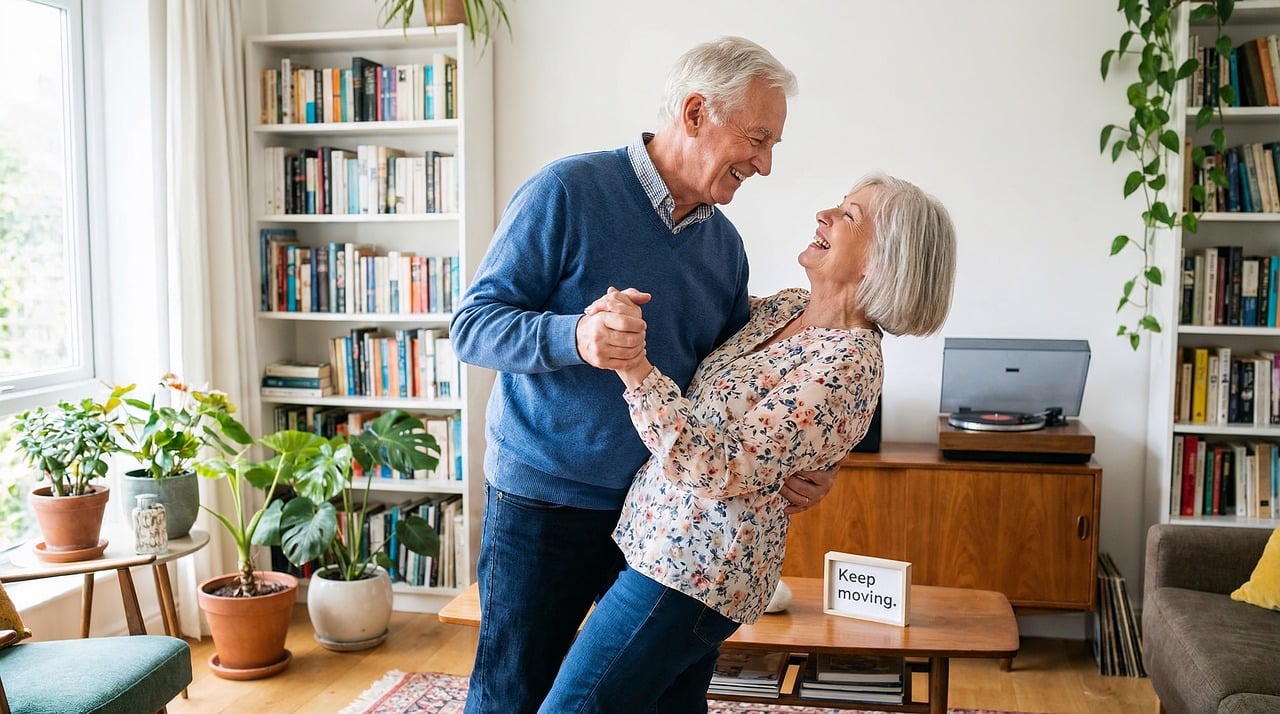
Bodyweight training is particularly beneficial for older adults due to its focus on functional movements, balance, and joint stability, without the need for heavy external loads.
- Reduced Impact: Less stress on joints compared to lifting heavy weights.
- Improved Balance and Coordination: Exercises like squats, lunges, and single-leg stands directly enhance balance, reducing fall risk.
- Functional Strength: Builds strength directly applicable to daily activities like standing up from a chair, climbing stairs, or carrying groceries.
- Accessibility: Can be done anywhere, anytime, without equipment or gym memberships.
Key Considerations for Older Adults:
- Start Slowly: Begin with fewer repetitions and sets, gradually increasing as strength improves.
- Prioritize Form: Proper technique is more important than speed or quantity.
- Use Support: Hold onto a wall, chair, or counter for balance during squats, lunges, or single-leg exercises.
- Listen to Your Body: Avoid pain. Modify exercises or rest if discomfort arises.
- Incorporate Mobility: Gentle stretches and mobility exercises (e.g., arm circles, hip rotations) before and after workouts.
Beyond Basic Exercises: Progressive Overload with Bodyweight
The primary limitation of bodyweight training, often cited, is the perceived lack of progressive overload – the need to continually increase the challenge to build strength. However, bodyweight training offers several methods for progression:
- Increase Repetitions & Sets: Simply doing more.
- Decrease Rest Times: Improves endurance.
- Slow Down Movements (Tempo Training): Increases time under tension, making exercises harder.
- Increase Range of Motion: Deeper squats, fuller push-ups.
- Unilateral Training: Performing exercises on one limb at a time (e.g., pistol squats, single-leg glute bridges). This doubles the relative load on the working limb.
- Plyometrics: Explosive versions of exercises (e.g., jump squats, clap push-ups).
- Leverage Changes: Modifying body position to increase resistance (e.g., decline push-ups, archer push-ups).
- Adding Instability: Performing exercises on an unstable surface (e.g., balance board, cushion) or with less contact points (e.g., one-arm push-ups).
Comparison of Bodyweight vs. Machine Workouts
| Feature | Bodyweight Exercises | Gym Machine Exercises |
|---|---|---|
| Accessibility | High (no equipment, can be done anywhere) | Low (requires gym membership or home equipment) |
| Cost | Very low (practically free) | High (membership fees, equipment purchase) |
| Muscle Isolation | Lower (often compound movements) | Higher (designed to isolate specific muscles) |
| Functional Strength | Higher (engages stabilizers, improves balance) | Lower (machine provides stability) |
| Beginner Friendliness | Moderate (requires learning form without guidance) | High (guided movement, often safer for beginners) |
| Progressive Overload | Achieved through variations, tempo, unilateral work | Achieved by increasing weight plates |
| Joint Stress | Generally lower (self-regulated load) | Can be higher with heavy loads, but guided movement |
| Space Required | Minimal | Significant |
The Top Bodyweight Workout “Equipment”
While the core idea is “no equipment,” a few simple, inexpensive items can significantly enhance bodyweight workouts, making them more versatile and challenging. These are not “machines” but tools that expand possibilities.
- Pull-up Bar: Essential for back and bicep development. Doorframe versions are common.
- Resistance Bands: Versatile for adding resistance to squats, push-ups, glute bridges, or assisting pull-ups.
- Yoga Mat: Provides cushioning for floor exercises and grip.
- Sturdy Chair/Bench: Useful for incline push-ups, box squats, tricep dips, or elevated feet for decline push-ups.
- Suspension Trainer (e.g., TRX): A more advanced “bodyweight” tool that allows for a wide range of exercises, from inverted rows to single-leg squats, by using your body as resistance against gravity.
- Jump Rope: Excellent for cardiovascular conditioning.
These items are optional but can significantly expand the range and intensity of bodyweight training, bridging some of the gaps left by machine-based workouts.
Strength Training & Bodyweight Workout Equipment
The term “equipment” for bodyweight training often refers to items that facilitate or enhance natural body movements, rather than replacing them. As noted, a pull-up bar allows for vertical pulling, a movement hard to replicate purely with bodyweight on the floor. Resistance bands add external resistance to typical bodyweight exercises, increasing the challenge for muscles like the glutes during squats or the chest during push-ups.
For example, a resistance band can replicate the tension of a leg curl machine to some extent. By anchoring a band to a sturdy object and looping it around your ankle, you can perform standing or lying leg curls, engaging the hamstrings. Similarly, wrapping a band around your thighs above the knees during squats or glute bridges increases glute activation, mimicking the feeling of a glute-specific machine.
Suspension trainers are perhaps the closest thing to “equipment” that still leverages bodyweight as the primary resistance. They allow for movements like inverted rows (targeting the back similar to a seated row machine), chest presses (similar to a chest press machine but with added instability), and single-leg squats, all by adjusting body angle and leverage. The instability introduced by the straps also engages more stabilizer muscles, offering a different training stimulus than fixed-path machines.
The key takeaway is that “bodyweight workout equipment” aims to make bodyweight exercises more challenging, accessible (e.g., assisted pull-ups), or to enable movements that are otherwise difficult without external support (e.g., inverted rows for back strength). They don’t replace the body as the primary resistance, but rather augment its capabilities.
Conclusion
Embracing bodyweight alternatives to gym machines offers a practical, cost-effective, and highly adaptable path to strength and fitness. Whether you’re a seasoned gym-goer looking for home-based options, a beginner seeking an accessible entry point to exercise, or an older adult prioritizing functional strength and mobility, the human body provides a comprehensive training tool. By understanding the core muscle groups targeted by gym machines and applying progressive overload principles to bodyweight movements, you can achieve significant fitness gains without ever stepping foot in a gym. The emphasis shifts from lifting external weight to mastering your own body, leading to a type of strength that translates directly to improved daily function and overall well-being.